Renting a Construction Dumpster: What Changes on a Job Site
Jake Harlow
June 6, 2026 · 9 min read
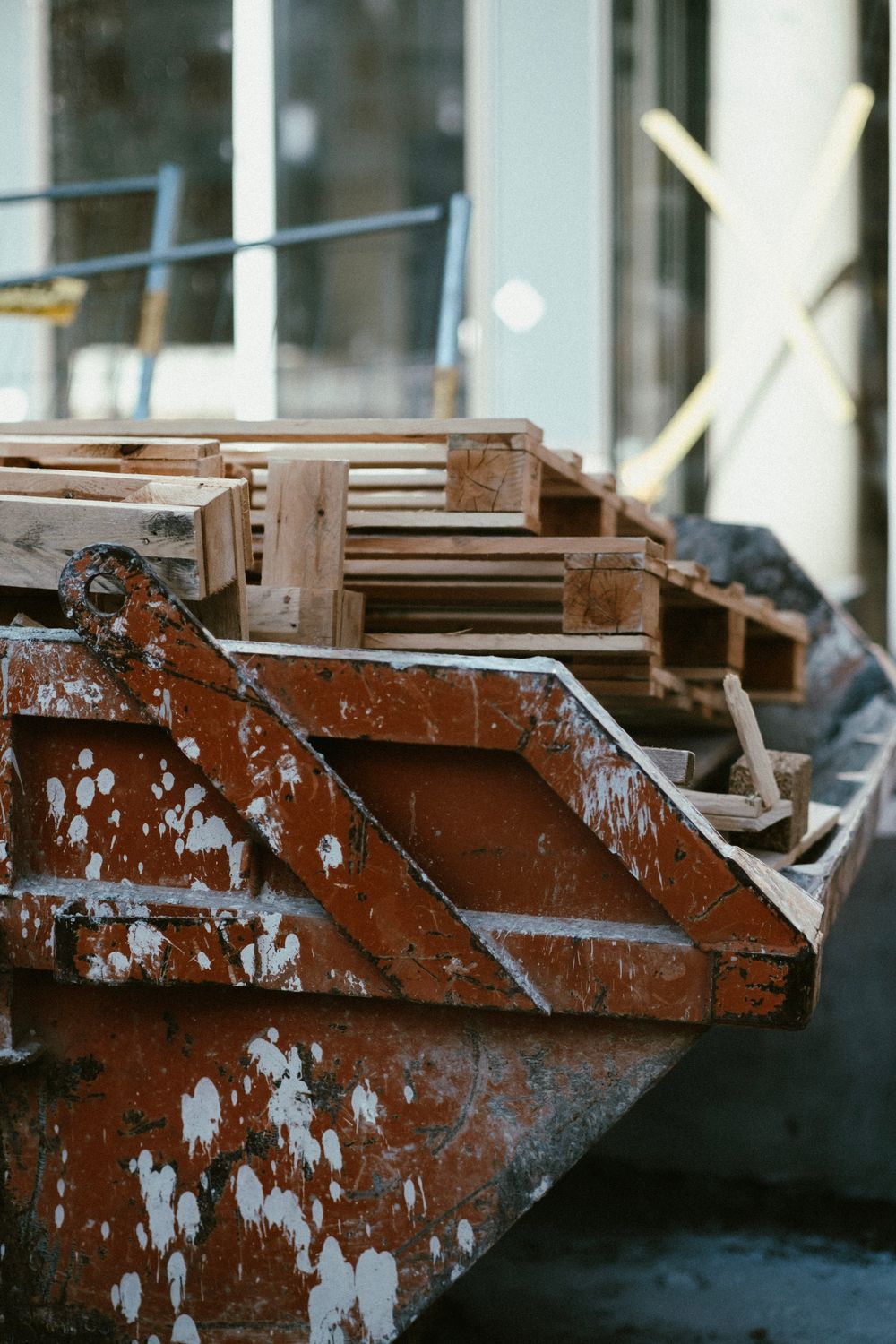
A construction dumpster is, technically, just a regular dumpster with better career prospects. The container is the same steel box. What changes is everything around it — the debris weighs more, the permits are more complicated, and most jobs need the bin swapped out multiple times before the project closes. Most residential rentals are one call, one container, one haul. Construction is rarely that clean.
I drove roll-off trucks for a decade on the Front Range and spent a good portion of that time on job sites. The calls that went badly shared a pattern: a contractor booked a container the same way they'd book one for a garage cleanout, loaded it with concrete and demolition debris, and found out about the weight limit three weeks into a six-week project. That conversation with the company is a short one. The invoice is not.
Quick answer
A construction dumpster rental works on the same pricing structure as a residential one — same container, same truck, same weight-based billing. The differences are three: construction debris hits weight limits faster (especially concrete and masonry), job site permits are more involved than driveway placements, and most projects require multiple pulls rather than a single haul. Plan for all three before booking.
Construction Debris Hits Weight Limits Faster Than Most People Expect

Residential garage cleanouts are mostly light material — furniture, boxes, carpet. Construction debris is a different story. Concrete and masonry weigh roughly 3,000–4,000 pounds per cubic yard. A standard 20-yard container has a weight limit of 2–4 tons. You can hit a 2-ton limit with less than half a cubic yard of poured concrete. The container still looks nearly empty. The scale at the landfill shares none of that optimism.
The material breakdown on a typical residential build or significant renovation:
- Framing and rough carpentry: lumber scraps, plywood, OSB — light, manageable in any size container
- Drywall and finishing: moderate volume, moderate weight — straightforward in standard containers
- Masonry and concrete: footings, slabs, block work — dense, hits weight limits before the bin looks half-full
- Roofing: shingles, decking, flashing — moderately heavy (3–5 tons for an average residential roof)
- Mixed demolition debris: the variable category — weight depends entirely on what is being torn out
Rule of thumb: if more than 25% of your debris is masonry, concrete, or tile, size the container based on its weight limit rather than its cubic-yard capacity. Ask specifically what the weight allowance is for the size you are booking — and ask what the overweight fee runs. At $40–$200 per extra ton depending on the company and market, it accumulates across multiple pulls.
The EPA's construction and demolition materials data identifies concrete as the single largest category of C&D waste by weight at licensed facilities. That number exists because concrete is also the most common cause of overweight charges on job sites. Ask about the weight limit before booking, not after the truck pulls away.
Sizing a Container for Each Phase of the Build
Construction projects do not generate the same debris at every phase. Foundation work produces concrete and soil. Framing produces light lumber scraps. Roofing produces shingles. Finishing produces drywall cutoffs, flooring, and trim. The right container for framing week is often wrong for foundation week.
Here is a practical reference by project phase:
| Construction Phase | Primary Debris | Recommended Container | Watch the Weight? |
|---|---|---|---|
| Foundation / site work | Concrete, soil, rock | 10–20-yard (low fill) | Yes — very closely |
| Rough framing | Lumber, plywood, OSB | 20–30-yard | No — light material |
| Roofing | Shingles, decking, felt | 20-yard | Yes — 3–5 tons typical |
| Drywall / insulation | Drywall, fiberglass batts | 20–30-yard | No — manageable |
| Finishing / trim | Flooring, trim, fixtures | 10–20-yard | No — light material |
| Demo / renovation | Mixed — masonry, lumber, tile | 20–40-yard | Yes — depends on mix |
Most contractors on a full residential new build use a 30 or 40-yard container for framing and drywall phases, and a smaller container with a higher weight allowance for masonry and foundation work. This is not the cheapest option per container. It is the cheapest option when you price out the alternative — overweight fees on a 30-yard loaded with concrete are not gentle on the project budget.
For a full breakdown of container dimensions and what each size holds, see How to Choose the Right Dumpster Size.
Permits and Access Are More Complex Than a Driveway Placement

A container on a private driveway typically does not need a permit. A container on a city street usually does. A construction job site sits in a third category, and the rules vary more than expected.
Most job sites keep the container on private property — the lot being developed. That usually means no city permit for the container itself. But some municipalities require notification or a separate permit for construction site dumpsters regardless of placement, especially in urban or high-density areas. Some cities bundle this into the building permit already pulled; others require it separately.
Before the driver arrives onsite:
- Confirm whether the container sits on private property or overhangs a public right-of-way
- Ask the local building department whether a construction site dumpster permit is required separately from the build permit
- Check overhead clearance along the truck's delivery path — scaffolding, power lines, and tree branches all matter
- Confirm the surface is stable enough for a loaded container; soft soil and mud can shift under weight
For the full permit breakdown by placement type, see Do You Need a Permit for a Dumpster Rental. For job sites with active crews, OSHA's construction standards cover waste container placement requirements that apply regardless of what the local permit office says.
Multiple Pulls or One Big Container: How to Think About It
On a construction project, you will need more than one pull. The question is whether to plan for them in advance or react to them as the project progresses.
Reacting costs more. An unplanned pull — the container is full, you call for a same-day swap-out — typically runs $50–$150 above a scheduled pull rate. Across five or six swaps on a full residential build, the unplanned approach can add $300–$900 to the project cost compared to the planned one. That is a figure worth mentioning to whoever controls the materials budget.
The planned approach: estimate your debris volume by phase before booking and tell the company how many pulls you expect. Ask about a multi-pull rate. Some operators offer a per-pull price lower than booking each haul separately, especially for contractors they work with on multiple jobs. That conversation is worth having at booking, not after the third unscheduled swap.
A rough estimate for a 2,000 sq ft residential new build: 5–7 pulls of a 30-yard container over the project life. A full renovation of similar scope typically runs 3–5 pulls depending on how much structure is being replaced. (I reckon most contractors who have built more than three houses can name their actual average to within one pull. If you can, use that number, not this one.)
When to Skip the Standard Roll-Off for Construction Waste

A standard roll-off is the right tool for most construction debris. It is not the right tool for all of it.
Skip the standard container for concrete-only debris. If the project is primarily a concrete demolition — a driveway, a footing, a retaining wall — ask about a heavy-debris container with a higher weight allowance. Standard roll-offs are sized for mixed debris. Loaded only with concrete, a 20-yard container will hit its weight limit with barely a quarter of the bin filled. A dedicated heavy-debris container is the better call for that material.
Skip the roll-off for asbestos-containing materials. Materials suspected of containing asbestos — present in some floor tiles, ceiling tiles, pipe insulation, and older siding — require licensed abatement and specialized disposal. This is a separate process from roll-off rental. The EPA's asbestos guidance covers identification and disposal requirements before any disturbing of suspected material.
Consider a front-load dumpster for long commercial projects. For job sites running six months or more with consistent weekly waste output, a front-load dumpster on a scheduled service contract often costs less per ton than repeated roll-off pulls. Roll-offs are best for burst debris — heavy during demo and framing phases, lighter during finishing. Steady, ongoing waste from a long commercial site sometimes fits front-load service better. Ask the company to quote both options if the timeline is long.
For commercial job site rentals specifically, see Commercial Dumpster Rental: What Businesses Actually Need. For a comparison of container types and project fits, see the resources page.
Straight Answers
What size dumpster do I need for a construction project?
It depends on the phase. Foundation and concrete work uses a 10–20-yard container at low fill levels due to weight limits. Framing and drywall phases typically take a 20–30-yard. Finishing work fits a 10–20-yard. For a full build, discuss sizing by phase with the rental company rather than picking one container for the entire project.
How much does construction dumpster rental cost?
Standard rates for construction rentals run $400–$650 for a 20-yard container and $500–$750 for a 30-yard on a 7-day rental. Multi-pull projects may qualify for a contracted per-haul rate that is lower than booking each pull separately. Weight overages are the most common unplanned cost — at $40–$200 per extra ton, concrete-heavy phases need a separate budget line. For full pricing, see What Does a Roll-Off Dumpster Rental Actually Cost.
Do I need a permit for a construction dumpster on a job site?
If the container sits on the private lot being developed, a separate dumpster permit is often not required — though this varies by municipality. Some cities require notification or a separate permit regardless of placement. Check with the local building department before booking. For the full permit breakdown, see Do You Need a Permit for a Dumpster Rental.
How many dumpster pulls does a typical residential build need?
A 2,000 sq ft residential new build typically needs 5–7 pulls of a 30-yard container over the project. A full renovation of similar scope runs 3–5 pulls depending on how much structure is being replaced. These numbers vary based on material mix and site efficiency — if you have your own average from previous builds, use it when estimating.
Can I put concrete in a construction dumpster?
Yes, but concrete hits weight limits fast. A 20-yard container with a 2-ton limit can be maxed out by less than half a cubic yard of poured concrete. For concrete-heavy work, ask specifically about heavy-debris containers with higher weight allowances — they are priced differently and better suited to the material than a standard roll-off with a mixed-debris weight limit.
What is the difference between a construction dumpster and a regular dumpster?
The container is the same. What differs is how it is used. Construction rentals typically involve heavier debris, more complex site access, more frequent pull schedules, and sometimes different permit requirements. The rental company prices both the same way — by size and weight — but the job site adds variables that a standard residential booking does not.
What construction materials cannot go in a roll-off dumpster?
Asbestos-containing materials require licensed abatement and specialized disposal — not a standard roll-off. Paint, solvents, and other hazardous chemicals are prohibited regardless of project type. Some municipalities also restrict certain demolition materials from standard roll-off disposal. Confirm with your provider if the project involves older building materials or demolition of pre-1980s structures.
The job site already has enough moving parts without the bin becoming one of them. Book it right the first time, tell the company what you are loading and how many phases the project has, and give us a call if the debris mix is anything but simple. Construction debris almost never is — and I mean that as a compliment to the trade, not a warning.
Frequently Asked Questions
- What size dumpster do I need for a construction project?
- It depends on the phase. Foundation and concrete work uses a 10–20-yard container at low fill levels due to weight limits. Framing and drywall phases typically take a 20–30-yard. Finishing work fits a 10–20-yard. For a full build, discuss sizing by phase with the rental company rather than picking one container for the entire project.
- How much does construction dumpster rental cost?
- Standard rates for construction rentals run $400–$650 for a 20-yard container and $500–$750 for a 30-yard on a 7-day rental. Multi-pull projects may qualify for a contracted per-haul rate that is lower than booking each pull separately. Weight overages are the most common unplanned cost — at $40–$200 per extra ton, concrete-heavy phases need a separate budget line.
- Do I need a permit for a construction dumpster on a job site?
- If the container sits on the private lot being developed, a separate dumpster permit is often not required — though this varies by municipality. Some cities require notification or a separate permit regardless of placement. Check with the local building department before booking.
- How many dumpster pulls does a typical residential build need?
- A 2,000 sq ft residential new build typically needs 5–7 pulls of a 30-yard container over the project. A full renovation of similar scope runs 3–5 pulls depending on how much structure is being replaced. These numbers vary based on material mix — use your own average from previous builds if you have it.
- Can I put concrete in a construction dumpster?
- Yes, but concrete hits weight limits fast. A 20-yard container with a 2-ton limit can be maxed out by less than half a cubic yard of poured concrete. For concrete-heavy work, ask specifically about heavy-debris containers with higher weight allowances — they are priced differently and better suited to the material than a standard roll-off.
- What is the difference between a construction dumpster and a regular dumpster?
- The container is the same. What differs is how it is used. Construction rentals typically involve heavier debris, more complex site access, more frequent pull schedules, and sometimes different permit requirements. The rental company prices both the same way — by size and weight — but the job site adds variables a standard residential booking does not.
- What construction materials cannot go in a roll-off dumpster?
- Asbestos-containing materials require licensed abatement and specialized disposal — not a standard roll-off. Paint, solvents, and hazardous chemicals are prohibited regardless of project type. Some municipalities also restrict certain demolition materials. Confirm with your provider if the project involves older building materials or pre-1980s structures.
Ready to Find the Best Price?
Compare quotes from vetted local companies. No hidden fees, no oversized containers.
Get a Free Quote