
Concrete Dumpster Rental: Why Smaller Bins Usually Make More Sense
Jake Harlow
July 3, 2026 · 9 min read
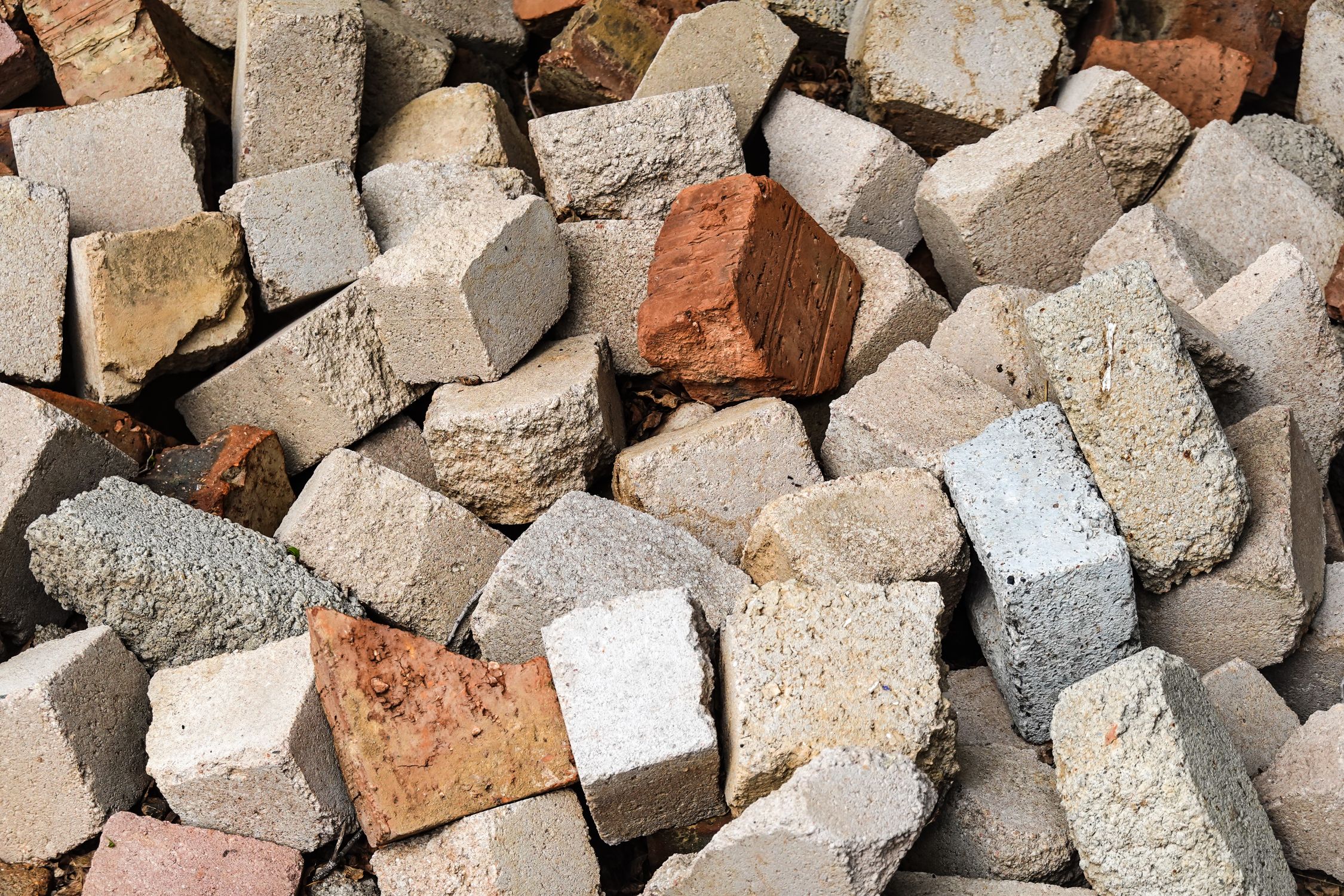
Concrete does not lose weight when you break it up. (I know. Disappointing.) A one-car driveway slab typically runs 1,500–1,800 lbs. Break it into chunks, load it into a standard roll-off, and you can hit the weight limit before the container is a quarter full. That is the concrete dumpster problem in one line: it is always about weight, not about how many cubic yards of space remain.
The right container for a concrete-heavy job is usually a smaller one with a higher weight rating, not a 30-yard or 40-yard bin. A larger container does not solve a weight problem — it gives you more volume at a higher price while the weight limit stays fixed. This guide covers how concrete, brick, pavers, and tile behave under a weight limit and what to ask before you book.
Quick take
- Small concrete job (one driveway section, a patio, a few slabs): 10-yard or dedicated heavy-debris container
- Mixed remodel debris with some concrete: 10- or 20-yard depending on total volume
- Mostly concrete from a large demolition: Ask about concrete-specific pricing and weight allowances before booking
- Large clean load: A concrete recycler may accept it at lower cost — worth one phone call
Why Concrete Plays by Different Rules
Standard roll-off pricing is built around light-to-moderate residential debris: furniture, drywall scraps, carpet, cabinets, yard waste. The weight limits on residential containers — commonly 2–6 tons depending on size and provider — are calibrated for that kind of load. Concrete is not that kind of load.
Broken concrete in a roll-off container weighs roughly 1.5–2 tons per cubic yard. That is 3,000–4,000 lbs for every yard of space used. A 10-yard container with a 2-ton limit runs out of weight after a single cubic yard of concrete — roughly the debris from one short section of sidewalk. The bin still looks nearly empty. The weight limit is gone.
Most overweight charges on concrete jobs trace back to this mismatch: the container was sized by volume, but weight was the binding constraint the whole time. The fee arrives after the driver takes the load to the scale. At that point, the conversation you should have had at booking is now a line item on the invoice.
The fix is straightforward. Most rental companies will tell you if a dedicated heavy-debris container makes more sense for your job. Some offer concrete-rated units with higher weight allowances at a price that accounts for the heavier tipping fees. Asking that question before booking is the whole game.
How Heavy Is Heavy: Concrete, Brick, Pavers, and Tile by the Numbers
Dense materials vary more than people expect. Concrete is the heaviest common debris type on a residential job. Tile and masonry are close behind. Here is how the most common heavy debris materials compare:
| Material | Approx. Weight per Cubic Yard | Notes |
|---|---|---|
| Concrete (broken chunks) | 1.5–2 tons | Varies with rebar content and rubble packing |
| Brick / CMU block | 1.5–2 tons | Similar density to concrete; mortar adds weight |
| Asphalt (broken pavement) | 1.4–1.8 tons | Slightly lighter than concrete; still hits limits fast |
| Ceramic / porcelain tile | 0.8–1.2 tons | Includes weight of cement board backer in most jobs |
| Natural stone / pavers | 1.5–2.5 tons | Dense stone (granite, bluestone) at the high end |
| Dirt / soil (dry) | 1–1.4 tons | Wet soil is heavier; varies with organic content |
| Mixed residential debris | 0.3–0.8 tons | Furniture, drywall, carpet — the light end of the scale |
The gap between the top and bottom of that table — five to six times the weight difference per cubic yard of space used — is why the sizing conversation changes completely when concrete is involved. A 20-yard container that handles a whole-home cleanout without issue will hit its limit fast if you swap furniture and drywall for broken concrete patio slabs.

Clean Concrete vs. Mixed Debris: Why It Sometimes Matters
Many rental companies differentiate between clean concrete loads and mixed demolition debris. Clean concrete — broken slab without rebar sticking out, no dirt mixed in, no wood or drywall alongside it — can sometimes go to a recycling facility rather than a C&D landfill. Recycling facilities accept it at a lower tipping fee. Some companies pass part of that saving on through a dedicated clean-concrete rate.
Mixed loads — concrete chunks alongside drywall scraps, wood framing, insulation, and general demo debris — go to a standard landfill. That is fine and accepted by virtually every rental company. You are not required to separate concrete from everything else. But if the majority of your load is clean, uncontaminated concrete, it is worth asking your provider whether they offer a separate rate. Sometimes they do.
One note: what one company calls “clean concrete” may include rebar for another. Ask your specific provider what they mean before deciding whether to sort the load. The accepted materials guide covers general rules, but concrete pricing is one area where the local conversation matters more than a general answer.
Sizing a Container for Concrete and Heavy Debris
For jobs where most of the debris is concrete, brick, or other heavy material, weight is usually the constraint before volume. For mixed jobs where concrete is a small part of the overall load, volume stays the primary factor. The full sizing guide covers all project types; here is a concrete-specific breakdown:
| Container | Typical Use Case | Concrete Consideration |
|---|---|---|
| Mini / heavy-debris (4–8 CY) | Sidewalk section, small patio, paver replacement | Rated for dense material; ask for the specific weight limit |
| 10-yard | Small driveway removal, retaining wall block, light concrete job | Standard weight limits vary by company (1–3 tons); confirm before loading |
| 20-yard | Mixed remodel debris with some concrete, one-car driveway plus other material | Right for mixed loads; confirm weight allowance if concrete is a significant portion |
| 30-yard | Large mixed renovation projects with light-to-moderate debris | More volume, not proportionally more weight capacity — rarely the right call for heavy loads |
| 40-yard | Large commercial projects, mostly light debris | Weight limit still applies; does not solve a concrete weight problem |
The 10-yard gets mentioned here more than you might expect because several companies offer dedicated heavy-debris or concrete-rated 10-yard containers with higher weight allowances than their standard residential unit. It is worth asking specifically: “Do you have a heavy-debris container for mostly concrete?” The price and allowance on those units often makes more sense for concrete-focused jobs than a larger standard container. For the full 10-yard breakdown, the 10-yard dumpster rental guide covers weight limits and use cases in detail.
When a Bigger Bin Is Not the Answer
The instinct to book a larger container when concrete is involved is understandable. It is also usually backwards. A 30-yard container does not give you significantly more weight capacity than a 20-yard. It gives you more volume — which you cannot use if weight is the constraint before the bin fills. You pay for additional cubic yards of space while the weight limit stays the same.
The arithmetic is simple: if a 20-yard container has a 4-ton weight allowance and the material runs 2 tons per cubic yard, you fill roughly 2 cubic yards before hitting the limit. A 30-yard does not change the weight per cubic yard of what you are loading. It means paying for 30 yards of capacity while using 2 of them.
The right answer in that scenario is one of three options. First, a dedicated heavy-debris container with a weight allowance set for dense material. Second, multiple smaller pulls across the project. Third, contacting a concrete recycler directly if the volume is large enough — some accept clean, broken concrete at no charge because they can crush and sell it as aggregate.
For jobs where concrete is one part of a larger mixed load — a home gut where most debris is drywall and lumber, with some tile floor and a concrete step — a standard 20-yard works fine. The dedicated heavy-debris conversation is for jobs where concrete, brick, or stone is the dominant material. The demolition dumpster rental guide covers the weight-by-material breakdown in more detail for full demo projects.

Driveway Placement and Access
Concrete containers are placed the same way as any roll-off: the truck backs in, the container slides off the bed and settles on two steel rails. The placement concern for concrete jobs is point load on the driveway surface. A loaded concrete dumpster at its weight limit can stress decorative pavers, older cracked concrete, and asphalt in summer heat more than a lightly loaded residential container. Ask the driver about boards under the rails. Most carry them.
Overhead clearance is the other variable. The delivery truck needs roughly 60 feet of linear clearance to set the container and around 18–22 feet of overhead clearance for the cable lift. Trees, utility wires, and garage overhangs are the usual obstacles. Walk the delivery path before booking if there is any doubt.
If the container goes on a public street rather than a private driveway, a permit is typically required. Rules vary by city and county. The dumpster permit guide explains how to find out what your municipality requires. For what a concrete dumpster rental typically costs and what drives the price, the cost guide covers the variables in detail.
Straight Answers
How much does a concrete dumpster rental cost?
Pricing depends on location, container size, and debris type. Concrete-heavy loads often cost more than light residential debris because disposal fees at C&D facilities are higher for heavy material. Ask your provider for a quote that reflects what is actually going in — and ask what the overweight rate is if you go over. Those two numbers define the real cost ceiling.
Can I put concrete in a regular dumpster?
Often yes, with conditions. Most companies accept concrete in their standard roll-offs, but the weight limit still applies. Small amounts mixed with other debris rarely cause a problem. If concrete is the majority of the load, ask about dedicated heavy-debris pricing before booking. The overweight fee on a standard container typically costs more than the upcharge for a properly rated unit.
What is a lowboy or heavy-debris dumpster?
A lowboy — also called a heavy-debris container or concrete container — is a roll-off designed for dense material. It is typically smaller than a standard container (often 4–10 cubic yards) with a higher weight allowance per unit of volume and a lower profile that makes loading heavy material easier. Not every rental company has them, but most larger operators do. Ask specifically if your load is mostly concrete, brick, or stone.
Can I mix concrete with other construction debris?
Generally yes. Mixed loads of concrete, wood, drywall, and demo debris are accepted by most providers. The total weight limit applies across the whole load. If concrete is more than a small fraction of the load by weight, confirm the weight allowance at booking. Accepted materials vary by hauler and local landfill agreement, so ask what the company accepts before loading anything uncertain.
Can I put bricks, pavers, and tile in the same container as concrete?
Usually yes. Brick, block, pavers, and tile are common heavy debris that most providers accept together in the same roll-off. The combined weight accumulates at roughly the same pace as concrete alone. Treat any combination of masonry and ceramic as a weight-first sizing problem, not a volume problem.
Can I put dirt in a concrete dumpster?
Dirt is accepted by many providers but not all. Clean fill — uncontaminated soil with no organic material or debris mixed in — is sometimes handled separately because it can be reused. Contaminated or mixed soil loads are treated as standard C&D waste. Ask your provider before adding significant volumes of dirt to any container.
Do I need a permit for a concrete dumpster?
The permit requirement depends on placement. A container on a private driveway typically does not require a permit. One on a public street usually does. Requirements vary by city and county — the permit guide covers how to check what your municipality requires before the delivery date.
When should I skip the dumpster entirely for concrete?
Two situations: if the volume is very small, a pickup truck haul to a local transfer station may cost less than a dumpster rental. If you have a large volume of clean, uncontaminated concrete, a recycling facility may accept it at lower cost or no cost. Call a local recycler and ask before booking a roll-off for a primarily concrete load. The construction dumpster guide covers when a roll-off makes sense versus other options.
Concrete was always that weight. The sledgehammer just made it more expensive to ignore. Get the weight allowance confirmed at booking, ask about dedicated containers if the load is mostly dense material, and the invoice at the end will not be a surprise.
Frequently Asked Questions
- How much does a concrete dumpster rental cost?
- Pricing depends on location, container size, and debris type. Concrete-heavy loads often cost more than light residential debris because disposal fees for heavy material are higher. Ask your provider for a quote that reflects what is going in — and ask for the overweight rate. Those two numbers together define the real cost ceiling.
- Can I put concrete in a regular dumpster?
- Often yes, with conditions. Most companies accept concrete in standard roll-offs, but the weight limit still applies. Small amounts mixed with other debris rarely cause a problem. If concrete is the majority of the load, ask about dedicated heavy-debris pricing before booking — the overweight fee on a standard container typically costs more than the upcharge for a properly rated unit.
- What is a lowboy or heavy-debris dumpster?
- A lowboy — also called a heavy-debris container or concrete container — is a roll-off designed for dense material. It is typically smaller than a standard unit (often 4–10 cubic yards) with a higher weight allowance and a lower profile for easier loading. Not every company has them, but most larger operators do. Ask specifically if your load is mostly concrete, brick, or stone.
- Can I mix concrete with other construction debris?
- Generally yes. Mixed loads of concrete, wood, drywall, and demo debris are accepted by most providers. The total weight limit applies across the whole load. If concrete is a significant portion, confirm the weight allowance at booking. Accepted materials vary by hauler and local landfill agreement.
- Can I put bricks, pavers, and tile in the same container as concrete?
- Usually yes. Brick, block, pavers, and tile are common heavy debris that most providers accept together in the same roll-off. The combined weight accumulates at roughly the same pace as concrete alone. Treat any combination of masonry and ceramic as a weight-first sizing problem.
- Can I put dirt in a concrete dumpster?
- Dirt is accepted by many providers but not all. Clean fill — uncontaminated soil with no debris mixed in — is sometimes handled separately because it can be reused as fill material. Contaminated or mixed soil loads are treated as standard C&D waste. Ask your provider before adding significant dirt to any container.
- Do I need a permit for a concrete dumpster?
- The requirement depends on placement. A container on a private driveway typically does not need a permit. One on a public street usually does. Requirements vary by city and county — check what your municipality requires before the delivery date.
- When should I skip the dumpster entirely for concrete?
- Two situations: if the volume is very small, a pickup truck haul to a local transfer station may cost less. If you have a large volume of clean, uncontaminated concrete, a recycling facility may accept it at lower cost or no cost. Call a local recycler and ask before booking a roll-off for a primarily concrete load.
Ready to Find the Best Price?
Compare quotes from vetted local companies. No hidden fees, no oversized containers.
Get a Free Quote